
Choose 2D animation when your video explains abstract ideas, software or workflows, and 3D animation when it shows a physical product, device or process that needs accurate detail. If your subject is physical but your audience needs a simple, high-level message, a hybrid of 3D models with 2D motion graphics often works best.
Whatever your need, choosing the right medium should never stall your project. When you look at the strengths of 2D vs 3D animation for corporate videos, and assess them against what your audience currently needs to better understand your message, the right choice will become clear.
The framework is the same for every project. 2D and 3D animation are equally great mediums, but they excel in different scenarios, for different reasons. The best choice will depend on what you’re depicting; whether it’s real or abstract, who’s watching, and where the video will run. In this article, we’ll walk you through a five-question framework that will match these scenarios to their respective medium, explain why that medium works best, and discuss their trade-offs so that choosing between the two becomes intuitive.
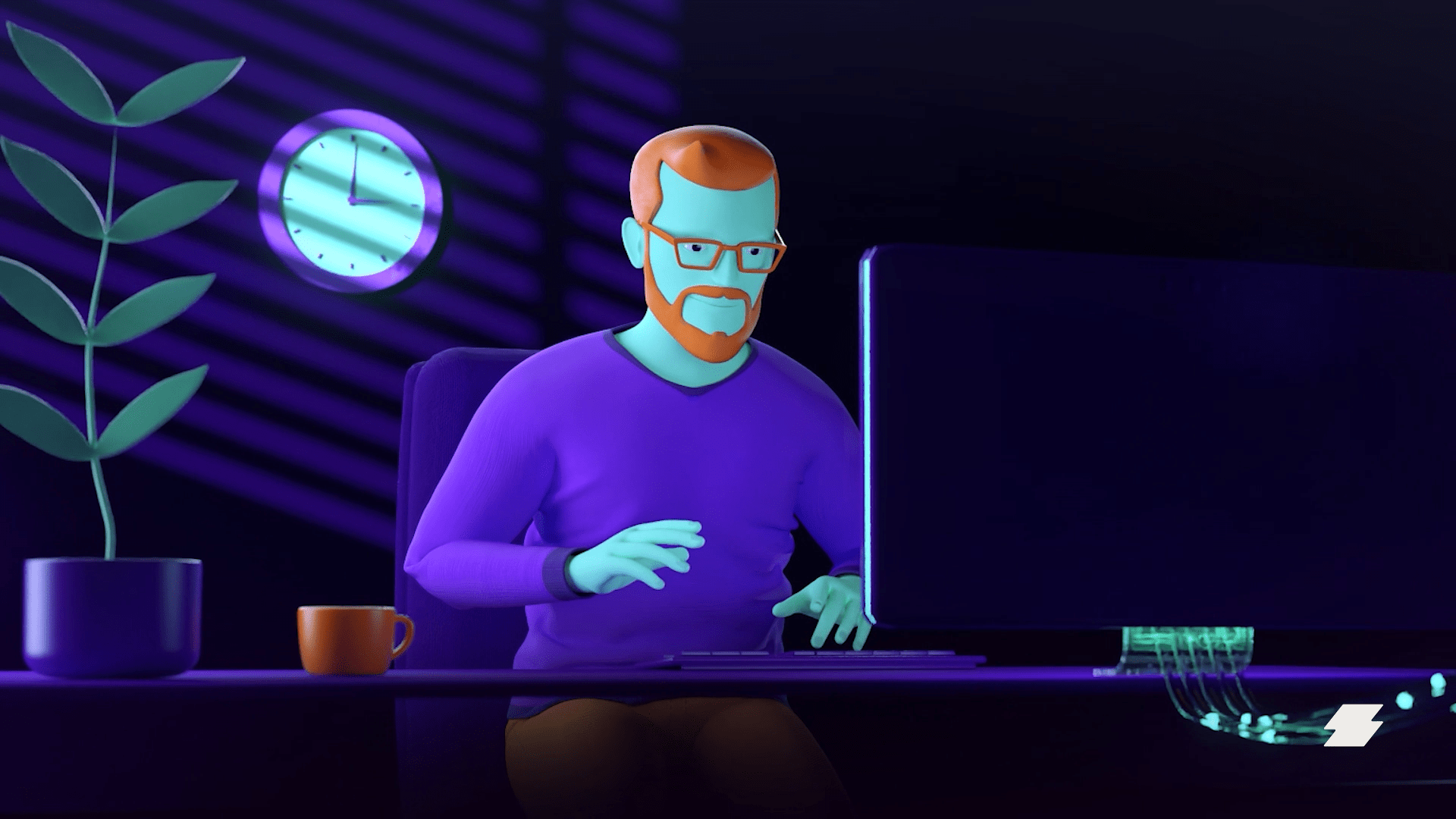
What is the difference between 2D and 3D animation?
The difference between 2D and 3D animation is dimension; 2D animation is fixed to a flat plane, whereas 3D animation introduces depth and is created within 3D modelling software, which can simulate realistic lighting and shading. By introducing a third dimension, 3D animation is easier to move around in and rotate whilst remaining accurate, simply by moving the in-software camera. Elements within a 3D space are created via 3D models and rigged via skeletons, which only need to be created once. 2D animation, on the other hand can be masked, rigged and reused, but are usually limited to the perspective they were created in.
B2B videos can use a mix of both formats, or supplement and expand on visuals with the use of AI, which we will discuss later in the article.
How to choose: match the format to what the video must show
When choosing between 2D and 3D animation, businesses should base their decision on five criteria: whether the subject is abstract or physical, who the target audience is, where the video will run, the intended brand “feel”, and the project’s production constraints. When representing an abstract concept or workflow, businesses can rely on 2D’s clean, simplified graphics. Alternatively, something that physically exists but is difficult or impossible to capture (such as medical or mechanical processes) will benefit more from the realism of a 3D environment.
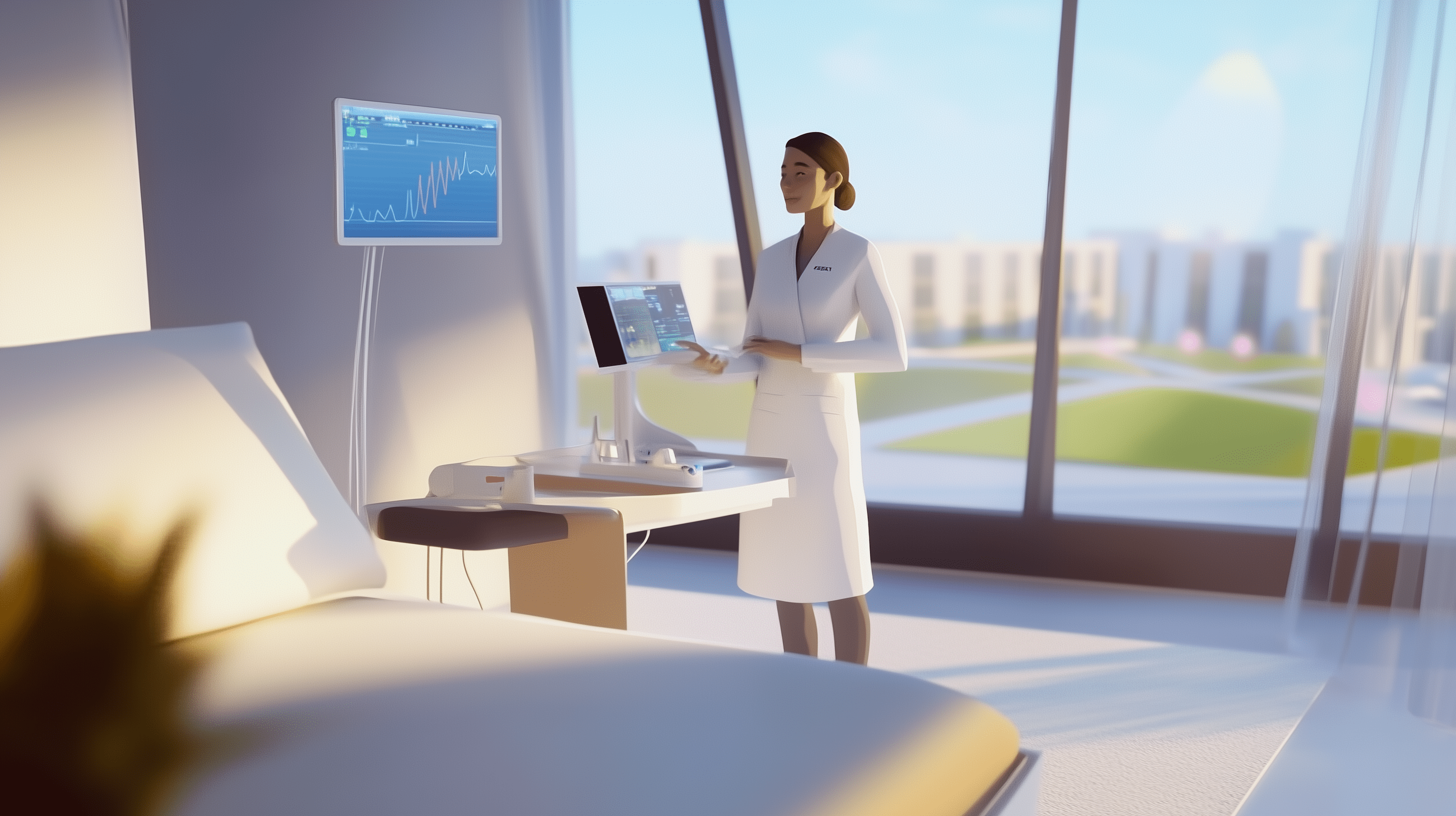
The five criteria:
1. Subject: Abstract concepts need simplification, physical processes need detail. 2D animation is simple but expressive, which is best suited towards symbolising workflows and ideas. 3D, on the other hand, can be rotated, scaled and shaded realistically, which is perfect for processes that need to be portrayed accurately to life or for imagined worlds that need to feel physically real.
2. Target audience: Technical staff need accuracy to make an informed decision, whereas senior decision makers need clarity. 3D is best for technical showcases; hardware, machinery, medical devices; while 2D is best for software overviews.
3. Channel: 2D is flexible and easy to iterate, suiting social-first campaigns that run on regular content. 3D hero films are rewarded at trade-shows or on websites, where one polished video should convert.
4. Brand feel: Generally, 2D leans warmer. It’s expressive and can carry with it a certain charm. But this is not a rule. 3D can also be intimate and emotive, as shown by our awareness campaign for Nacoa which used AI to retexture and bring to life scenes built in 3D.
5. Deadline and production constraints: The medium you choose should not result from production constraints. Both 2D and 3D can be produced on a tight budget or deadline, especially via a hybrid AI workflow. Your production constraints instead argue for a simpler execution of your chosen medium.
| Video job | Best format | Why | B2B example |
|---|---|---|---|
| Physical showcase | 3D | 3D can accurately replicate physical objects or logistics chains that are impossible or difficult to film. | Logistics video for Jaggaer |
| Building a sense of security and trust | 3D | 3D carries with it a sense of robustness and stability, which is why it is commonly used in cybersecurity spaces. | M&S Safety and Security Assistant recruitment video |
| Relatability | 2D | 2D animation is great for depicting expressive characters that viewers can empathise with. | HPE post warranty explainer |
| Visualisation of a process | 2D | 2D brings separate abstract elements together, forming links and building clarity. | Service overview for Teletracking |
Production, timeline, and revision trade-offs
A 3D pipeline typically takes more time than a 2D one because there are more stages involved. Modelling, rigging, texturing, lighting and rendering are all distinct tasks, often worked on by specialists. Though 3D animation can add weeks to a production timeline, there is a long-term advantage – reusability. A 3D model only needs to be created once; after that, it can be placed in a new environment, shot from a new angle, and animated with a rig that’s good to go. A 2D workflow is usually shorter, especially when working with assets that carry over into multiple sequences. Traditional frame-by-frame character animation, however, can be equally as demanding as 3D. Revision time also differs between the two mediums. Animators can easily draw over or iterate on a 2D frame, but a change in 3D is structural. Animators will have to revisit the modelling software; rework the mesh, retexture and then render again.
AI-assisted production can compress both pipelines. In 3D, our creatives have used AI to get the bulk of texturing done whilst using 3D animation to lock in camera angles and objects. In 2D, this can mean using AI to fill in frames between key frames or to generate background environments. A cross-format partner skilled in both 3D and 2D animation will consider your production constraints and use AI selectively – limited to stages in the workflow that will genuinely benefit from its inclusion.
AI-assisted production can also shorten the time it takes to apply late-stage revisions by expanding, regenerating or tweaking an animation. However, over reliance on AI as a fix can introduce inconsistencies or harm your brand image. The best workflow optimization here is to avoid the need for revisions in the first place by drafting a clear brief.
| Medium | Typical timeline (Synima Projects) | Revision behaviour | Asset reuse |
|---|---|---|---|
| 3D | 8-10 weeks | Intensive. Requires reworking in 3D editing software to change the fundamental structure of the mesh, lighting or textures. | More flexible. A 3D model is a polished asset that can be rendered multiple times in different scenes, from different angles. |
| 2D | 6-8 weeks | Easier. 2D frames can be drawn over and reworked, and assets can easily be swapped out. | Reuse is more limited, assets can be repurposed ‘as is’ - stills, graphics and backgrounds can be pasted into other projects, and vector animations can scale cleanly for billboards. |

Where each format earns its place in B2B
Here, we’ll discuss 2D vs 3D explainer videos, B2B case studies and hybrid options.
2D earns its place in SaaS, training and brand story videos that do not need the added complexity of detailed 3D visuals; B2B videos that need simple, symbolic graphics that break down complex concepts, or expressive visuals that form brand recognition and connection. The emotive capability of 2D animation is also suitable for awareness videos, as shown by our ADHD campaign for University College London. In 2D, we had the capability to create a relatable character that viewers could project themselves onto – further reinforced by lighting techniques that added an illusion of depth.
Working with a physical product that needs detailed, technical review? That’s when to use 3D animation. A meta-analysis of 36 studies and 2,226 learners found that 3D visualization improved spatial understanding when compared with more conventional teaching methods ( Anatomical Sciences Education 2015 ). The same principle also applies to medical, engineering and technical explainers – when viewers can see a product rotate, they don’t have to build a 3-dimensional picture in their heads from flat diagrams.
There’s also a case to be made for cybersecurity and support services here – even when dealing with abstract software or workflows, 3D animation has a sense of solid reliability that signals safety to business buyers. Our 3D animation for HPE is a great example of this. They needed an animation that would promote their comprehensive multivendor support service to clients, and by using 3D visuals, we could reinforce images of stability and strength.
When hybrid 2D/3D is right
If, after defining your subject, target audience, channel and ‘brand feel’, you notice that the most optimal medium for your project alternates between 2D and 3D, consider combining them.
Maybe you have a physical product to showcase – that’s a point towards 3D. But you’re targeting senior decision makers instead of technical evaluators, and need to back your brand story, or explain what your product can do for businesses in terms of ROI, which are abstract ideas better suited to 2D. In this case, you could use a base 3D model to provide context and validity to your claims, and then overlay 2D motion-graphics to break down those abstract concepts. This is both cheaper than full 3D, and clearer than full 2D.
Frequently Asked Questions
Is 2D or 3D animation better for explainer videos?
Both 2D and 3D work well for explainer videos. 2D suits most purposes, but 3D has its place in physical product showcases. 2D animation works because it breaks down abstract topics into clear symbolic visuals; graphics that are simple to read. But some explanations benefit from added detail and dimension, such as lifelike visualisations of medical and mechanical processes. In these scenarios, 3D provides the extra context needed for understanding.
Which is harder to produce, 2D or 3D animation?
3D is typically harder to produce because there are more specialist stages involved. Separate tasks for modelling, rigging, texturing, animating and rendering mean more initial work, but 2D can also be labor-intensive, especially when working frame-by-frame. Expressive, fluid motion requires more refinement and demands a high skill set. B2B videos, however, typically feature simpler graphics and often make use of reusable assets, which significantly reduce timelines and cost.
Can you combine 2D and 3D animation in one video?
Yes, you can combine 2D and 3D animation in one video. Video aims that align with the strengths of both 2D and 3D can benefit from both – a 3D explainer with 2D motion graphics overlaid on top, for example, can clarify both the hardware and software of a product respectively, keeping both separate yet connected. 2.5D (or commonly referred to as isometric animation) is also a popular style where a 3D-looking world is built in 2D software and can be a really effective approach for communicating complex concepts in an engaging way.
Does 3D animation always look more professional?
No, 3D animation does not always look more professional than 2D work. Professionalism comes from fit and execution. Animation agencies have the toolset and expertise to match the right medium for the project and will execute both mediums with polish. 2D graphics can be sleek, stylish, and often appear less cluttered when working with abstract concepts that benefit from lower visual complexity.
How long does a 3D animated video take to produce?
Across Synima’s projects, a 3D animated video typically takes 8-10 weeks to produce. This can extend and shorten based on how detailed the meshes are, how many assets are produced, whether revisions are necessary, render time, and how AI is used. Agencies using AI tools can streamline production by generating textures, auto-rigging and iterating on meshes, but AI use without clear direction and intent can extend timelines by introducing revision rounds.
Our Final Thoughts
2D and 3D animation are both excellent mediums and are equally capable of communicating B2B propositions effectively. The ‘right’ medium for your project is simply whichever will help your audience understand your message best. Whether that’s 2D to help break down an abstract subject, 3D to add context to a physical product, or a mix of both. If you would like to see what a production agency’s animation workflow looks like in practice, feel free to discuss your project with us – we’ll build a format tailored to you.

As a co-founder of Synima with over 20 years of experience, Quint has seen how the industry has evolved to adapt to new technology and advancements.
Combining his qualifications in psychology and with over 30 years of production experience, Quint understands how video and animation can be used as a communication tool and has a keen eye for identifying upcoming trends which will impact this.
