
Brands should use AI-generated video when the message matters more than who delivers it: training, explainers, product visuals and social content. Keep real people and real footage for testimonials, case studies and behind-the-scenes content, where authenticity is the point, and disclose AI use whenever it could pass as real.
We know that AI-generated video is a compelling option for brands who are increasingly expected to deliver more video content, on tighter deadlines and across multiple channels. The quality of AI-generated output has long since surpassed a viable threshold for commercial work, but audience reactions are still mixed. This perceived potential for backlash is often what holds brands back from using it.
But having created successful AI-produced work for our clients, we know that the only risk is using AI in the wrong way. Brands can reliably use AI in their video campaigns while staying compliant and preserving audience approval, so long as they follow a trust and authenticity framework.
In this article, we’ll discuss that framework and show you how to navigate AI-generated video from the perspective of a creative agency who knows that both traditional and AI-assisted video production have a place in 2026.

What the trust research shows
The research shows that AI video production is generally accepted by audiences, but there are a few conditions that, if broken, could jeopardize audience trust. One of these conditions is transparency. In a recent report, almost 90% of consumers globally want to know whether an image was created with AI (Getty Images), so brands should be honest with audiences and mark AI-generated content as such.
Another condition is video type – audiences are comfortable with instructional content presented via AI avatars, for example, but uncomfortable with AI avatars when the presence of a real person is expected (TechSmith).
For Gen Z audiences, trust in AI-generated content weakens when it feels emotionally flat or enters the “uncanny valley” (International Journal of Human-Computer Studies). Younger audiences judge AI-generated content as negative when it features certain elements, such as synthetic-sounding voices, no matter how engaging or informative the video is otherwise. This distinction is especially important for videos where authenticity matters, such as customer testimonials or behind-the-scenes footage, which should remain human.
Three myths about AI video
Myth one: audiences can’t tell.
Because AI video can be used by bad faith actors to mislead or exaggerate, audiences are increasingly viewing online content through a critical eye. Nearly 83% of US consumers say they’ve watched a video they believe was AI-generated (Animoto), and while audiences can’t always tell, they will always watch with scrutiny.
Though neither audiences nor AI detection tools can identify AI videos accurately 100% of the time, believing that you can use AI-generated content undisclosed will backfire long term. The majority of people are comfortable with AI use when brands are honest about it – hiding its use will raise questions that could be avoided by simply being upfront about it.
Myth two: AI always damages trust.
AI use only damages trust when used to replace real footage in videos that exist to form a human-to-human connection, such as testimonials, interviews and behind-the-scenes clips. If brands replace real footage in these types of videos with AI-generated visuals, they are negating what made those videos valuable in the first place.
Myth three: AI replaces production.
AI tools cannot replace the brand strategy and creative insight offered by production agencies. AI can find patterns in brand visuals, but it will not understand the choices behind them; it can deliver on-brand graphics in isolation, but will lack cohesion at scale. AI is a tool that can speed up the production process, a tool that creatives must direct, review and omit when the traditional option is better.
The authenticity test: what does the video claim?
Audience perception of AI use differs based on video type. Consider whether the persuasive weight of your video relies on real proof, locations, and people, or whether your video doesn’t need real footage to deliver on its aims.
| Brand video types | AI trust risk | Decision aid |
|---|---|---|
| Testimonial | High | Genuine reviews build trust and should not be replaced with AI generated avatars. |
| Case studies | High | Customer-brand relations are built from real footage; use AI only for assistance. |
| Explainer | Medium | AI elements can be used when the message matters more than who’s telling it. |
| Product visual | Medium | For products that are impossible or hard to capture traditionally, AI is a legitimate choice. If the product can be filmed, it should. |
| Training | Low | Use AI unless audiences would benefit from an expert or leadership perspective. |
| Social versioning | Low | The risk of using AI is low when localization is treated with care and platform-specific cuts match the quality of the original. |
Where AI helps without damaging trust
At Synima, we recommend that brands take a hybrid approach. AI cannot and should not be used as an alternative to every task across the traditional production pipeline. Rather, it is a production tool that excels at speeding up certain tasks, such as ideation, scripting, versioning, editing and localization. Trust is damaged when these tasks are left to AI without human review, and when AI usage seeps into creative or strategic decisions that need human direction and control.
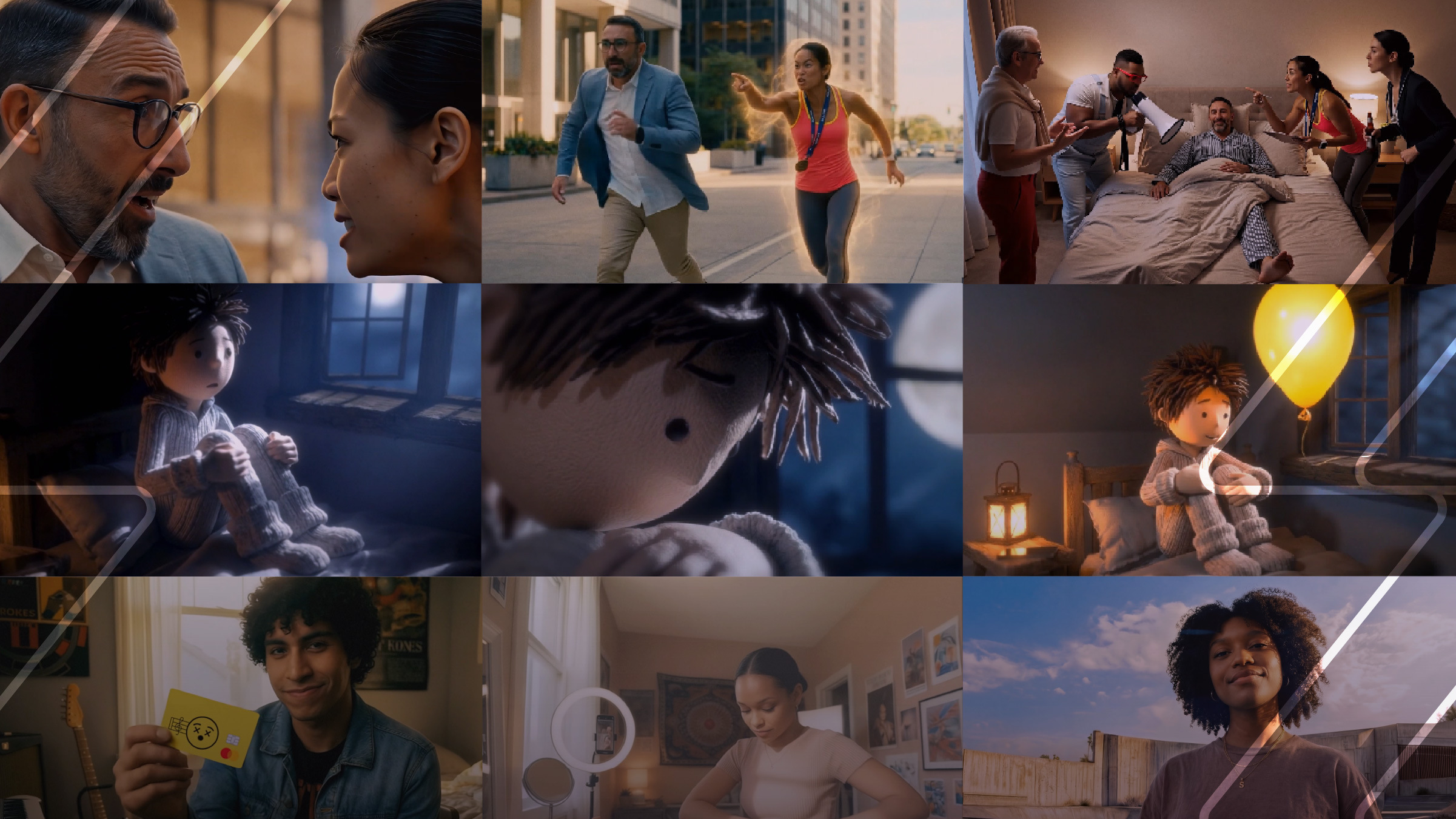
Our awareness campaign for nonprofit Nacoa is proof of how AI-assisted production and audience trust can co-exist.
We could both give the subject matter the sensitivity it deserved and reach our targeted deadline (just two weeks!) thanks to our hybrid production process. We used AI to texture 3D elements, which offered us the opportunity to pour attention and care into storytelling choices, which are what really earn the audience’s trust.

Disclosure: when to tell your audience
Some jurisdictions and platforms require AI-generated video to be disclosed. Under Article 50 of the EU AI Act, which applies from August 2, 2026, any AI-generated or manipulated video that could pass as real footage of existing people, places or events (a deepfake), including realistic avatars of real people, must be disclosed. This requirement doesn’t extend to unrealistic avatars or visuals that are clearly fake, as these do not have the same potential to mislead audiences.
Content posted on YouTube must also disclose AI use when it could potentially mislead audiences. This includes realistic footage of people, events or places that have been altered or generated. Assistive use, or unrealistic footage, doesn’t require disclosure. Luckily, YouTube makes it easy for brands to disclose AI-generated content via its new ‘AI use’ setting.
At Synima, we recommend that brands always disclose AI use, as this positions you as trustworthy and ensures compliance should disclosure laws change.
These claims are guidance, not legal advice.
Frequently Asked Questions
Can AI-generated video build trust?
AI-generated videos can build trust just like traditional videos can so long as they do not falsify testimonials or claim to be filmed in real life. Brands must use AI intentionally; a human should be overseeing output at all times to check for bias, and direct output so it remains consistent.
Unchecked AI use can lead to brand image drift, which can negatively impact how audiences perceive your online presence. Audiences need recognizable imagery to grow familiar with and trust in, so judge output with scrutiny. Audiences may also feel misled if AI-generated content is not labeled as such.
Should we disclose AI use in every video?
You should disclose AI use whenever omitting that information would mislead audiences. Some jurisdictions and platforms require AI-generated video to be disclosed. Under Article 50 of the EU AI Act, which applies from August 2nd, 2026, any AI-generated or manipulated video that could pass as real footage of existing people, places or events (a deepfake), including realistic avatars of people, must be disclosed. YouTube requires creators to do the same, as well as label realistic AI generated or edited content which could be mistaken as real.
While it is not always necessary to disclose AI-generated or edited content, we recommend that brands do so anyway to maintain trust. Audiences respect transparency, and most are accepting of AI use in contexts such as training, or when used as an editing tool.
Our Final Thoughts
Brands can use AI-generated video and maintain audience trust when they value transparency and use AI with discretion. For brands still navigating this, partnering with a hybrid creative agency who knows where AI genuinely improves production, where it damages trust, and how it can be used compliantly can offer the security they need.
If you would like to see what commercially viable AI-assisted video looks like, take a look at our work and find out more about our AI video production services.

