

For B2B media, choose an AI avatar when the main goal is delivering repeatable information, updating scripts frequently or producing versions in dfferent languages. Choose a real human presenter when the identity, expertise, trust or personal experience is needed for message credibility. For example, in testimonials, leadership communications and sensitive announcements. A campaign can use both formats but there is no absolute need to do so.
In fact, for businesses evaluating AI avatars, the question isn’t whether they’re polished enough for professional use in 2026, they reliably are. The question to consider instead is whether an AI avatar or real presenter would suit your B2B video best.
At Synima, we know that both options have real strengths. So in this article, we’ll guide you through the decision between AI avatars vs human presenters from the perspective of an agency who offers both. We’ll cover their use cases and their drawbacks, and assign the most optimal choice to real B2B scenarios. Backed by research, and in line with the latest disclosure laws.
What is an AI avatar presenter?
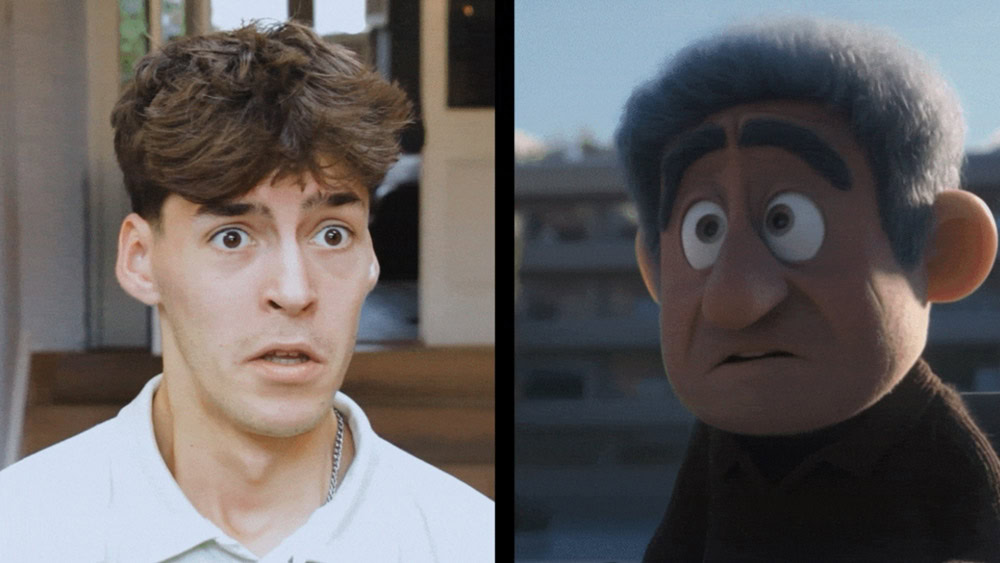
An AI avatar presenter is a digital on-screen presenter generated by artificial intelligence that talks and moves with human-like expression. Unlike human presenters, no filming is required – AI avatars run on text-to-speech algorithms that only need a script to work. AI presenters are split into two types; stock avatars, which are the default avatars provided by tools like Synthesia, and cloned avatars, which are trained on a real person and act as their digital twin.
Businesses may use a custom avatar for standard learning material when a particular employee’s identity matters but repeated filming is impractical. A stock avatar may suit content where the presenter doesn’t need to be a known person. language support, lip-sync quality and visual realism can vary by platofrm and avatar type. We suggest that before publishing localized versions, make sure to have a fluent reviewer check the translation and delivery.
What the research says about avatars and trust
The latest research shows that learning outcomes are equally high between videos presented by AI avatars and human presenters, but trust varies based on video type. A study involving 83 adult learners by Leiker found no statistically significant difference in learning benefits between the AI-presented and human-presented training videos used. Participants also perceived no difference in their learning experience. A study by Netland and colleagues involving 447 participants found that viewers preferred learning from the human-made videos, while getting similar levels of knowledge from AI-generated media to human. How comfortable viewers are with AI presenters may change depending on the subject however. In a study Techsmith, the company behind Camtasia , found that viewers were most comfortable with AI avatars presenting instructional, screen-based content, and least comfortable when a personal presence was expected, such as CEO welcome videos or team updates.
These studies suggest that AI presenters can support learning in an instructional setting. For B2B brands, the practical quesiton is whether the audience needs information alone or also wants to hear fron identifiable, accountable people. When that person’s experience matters, a real presenter is usually the preferred choice.

Which format should each video use?
When an AI avatar is the right choice.
An AI avatar is the right choice when information matters more than who’s delivering it. These types of video could be delivered by anyone and the impact would remain the same; think product explainers, training materials and general announcements. The benefit of using AI avatars here increases with scale – localized variants allow businesses to deliver scripts at matched quality, and updates become easier to apply, maintaining consistency.
In most cases, the focus of a product explainer or training video should be on the content itself. The information is more important than its messenger – a clear case for AI avatars. But sometimes businesses have a second goal in mind. Maybe they need to prove that the information in a video is trustworthy, or they need to help learners feel motivated and capable. In these scenarios, a human presenter may be the stronger choice.
When a real presenter wins.
A human presenter is the right decision when a real person’s perspective or identity is inseparable from the message of a video. Connecting with lived experiences, believing in a campaign, or trusting reviews – all of this requires a real spokesperson. This can include testimonials, leadership announcements, founder-led sales content or sensitive comms.
Scale matters here. If you need to frequently update content told by a senior employee, consider custom avatars. This makes sense for lower stakes campaigns, or older content that needs a refresh. Important milestones, however, should remain filmed. The scale of a multi-lingual campaign may also call for a custom avatar solution, but measure this against the sensitivity of the subject.
When J.P. Morgan commissioned us to create a suite of marketing videos showcasing their range of treasury offerings, we knew that a human presenter was the right choice. “For this campaign, we cast a JPM advisor instead of using an AI avatar because the viewer needed an advisor. That role was important to the message. Yes, the treasury offerings were the focus of the video, but the guidance of a professional made the value of those offerings clear.” Matt Wright, CEO of Synima
How to combine both: a stakes-based framework.
Businesses can and should use both options depending on a message’s stakes, purpose and scale. A single campaign can feature both AI avatars and human presenters, but keep individual videos to one option, as switching between the two can read badly.
You should also consider how a mix of both human and AI avatars will affect your brand identity. We suggest using stock AI avatars for internal or gated videos, custom avatars for public-facing work, and human presenters for hero films and welcome videos that define brand identity. Take a look at our AI training video production options.
You can also take a look at our wide range of other AI video production services to get a better understanding of what a hybrid AI video agency can offer.
| Content Types | Recommended format | Reason |
|---|---|---|
| Training | AI | Training materials that do not need context provided by humans can be led by AI avatars. |
| Explainer | AI | If information matters over perspective, AI presenters provide enough clarity. |
| Testimonial | Human | Trust matters here. Human presenters solidify that a review is credible. |
| Leadership message | Human or AI clone | AI clones can work for routine updates because unlike testimonials, the speaker is already known to employees. For important milestones, go human. |
| Localized variant | AI with human review | AI tools can translate avatars in over 160 languages, but localization comes from professional review. |
Disclosure, consent, and brand risk
AI avatars can be used in commercial contexts so long as you follow disclosure laws. As of August 2, 2026, realistic custom AI avatars must be disclosed under the EU’s Article 50 of the AI Act. The same does not apply for unrealistic avatars that are obviously fake. Though businesses using custom AI avatars are not doing so to mislead, disclosure is still necessary under this act.
In the US, there’s no federal AI disclosure law yet, but New York’s Synthetic Performer Disclosure Law has required conspicuous disclosure of AI-generated human likenesses in adverts since June 9, 2026, and it applies to any business whose ads reach New York consumers, wherever it’s based. The Federal Trade Commission’s rules against deceptive advertising also apply to AI-generated content.
YouTube also requires creators to disclose when they have used artificial intelligence to “make a real person appear to say or do something that they didn’t say or do.” This rule does not apply to all work assisted by AI, but does apply to realistic AI avatars. Businesses can simply tick the new ‘AI use’ setting to disclose when a presenter is AI generated. Businesses must also get explicit likeness consent for cloned avatars via a written agreement. This should cover use cases, access and script approval.
Transparency fosters trust, so we recommend that businesses disclose the use of AI avatars in all contexts – even when disclosure isn’t necessary.
The above claims are guidance, not legal advice.

Frequently Asked Questions
Are AI avatars appropriate for B2B sales videos?
AI avatars are appropriate for certain types of B2B sales videos, such as scaled personalization and training, but they are not appropriate for videos with higher stakes, such as trust-building demos or brand films. If a business already has your trust and the goal is simply to educate them further, then an AI avatar will be able to deliver. However, if a sales video needs context, perspective or authority to be credible, then a human presenter will be required.
A real presenter should have experience relevant to the topic. That could be a technical expert leading viewers through a product demo, a senior employee detailing their brand story, or an advisor guiding business buyers through their options.
Do we have to disclose an AI presenter?
On some platforms and in some jurisdictions, yes, you must disclose when a presenter is AI generated. The latest EU AI transparency obligations state that “people should know when they are interacting with AI”, which includes realistic synthetic avatars. In the US, New York’s Synthetic Performer Disclosure Law requires adverts shown to New York audiences to conspicuously disclose AI-generated presenters, even if the business is based elsewhere. Most viewers are comfortable with AI avatars in training and educational contexts, so disclosing their use will not harm your message. For this reason, disclosure is recommended even when not necessary, especially in cases where omitting that information would impact trust. You can do this either while the video is playing or in the credits, caption or description.
Can an avatar be made of a real employee?
Yes, an avatar can be made of a real employee with written consent and usage rules. An AI avatar modelled on a real person is known as a custom avatar – employees will need to record a few minutes worth of them speaking, and then upload the footage to custom AI avatar generators like Synthesia. Make sure to film your employee in a well-lit room and to record high-quality audio for a more accurate and professional result. Your employee’s custom avatar can then deliver the same script in over 160+ languages with accurate lip-sync and lifelike expression.
Before using custom AI avatar tools, get explicit likeness consent. This should be in writing and cover everything from approved use cases, scripts and access. Under EU ruling and YouTube’s AI policy, a custom avatar of an employee (being a realistic depiction of a real person) must be consistently disclosed to audiences. Explore Synima’s AI Avatar production services for projects that need a digital presenter.
Our Final Thoughts
Businesses deciding between AI avatars and human presenters should look at their campaign’s stakes, scalability goals and whether the speaker’s identity is relevant to the message. High-stakes, brand defining campaigns that rely on connection need a human presenter; while low-stakes, high-output campaigns can make use of AI avatar technology, especially in training and educational contexts.
Ultimately, most campaigns will need both. Businesses should make their decision per video, factoring in how often you plan to update the video’s script, along with the sensitivity of the subject. You can do this by auditing each video against the table above; but if you would like to discuss your options further, feel free to contact us here at Synima where we offer both.
