

The best AI video agency in 2026 is one that aims to combine AI production tools with human creativity, transparent model use, clear IP terms, sector-relevant case studies and measurable post-delivery support. Potential clients should compare agencies based on 8 criteria: AI Model transparency, workflow ownership, hybrid creative skill, brand consistency, legal positioning, sector experience, pricing clarity and measurement process. For regulated, enterprise or brand-sensitive work, a hybrid agency can be safer than a generative AI-only service because it offers more control, compliance oversight and creative accountability.
In this article, we will cover:
• Evaluation criteria: How to build a decision framework, what to look for and red flags to avoid.
• AI-only or hybrid: Whether you should opt for an agency that uses AI across the board, or one that uses AI as a supportive tool.
• Legal protection: How to choose an agency that will give you full rights to your output and adhere to industry regulations.
What is an AI video production agency?
An AI video production agency is a creative studio that uses artificial intelligence as a supplementary tool across their workflow. From ideation, to editing, to distribution, AI cuts costs and reduces timelines. An agency could, for example, use video generators like Sora or Google Veo to support traditional shooting pipelines, combine human-written scripts with AI avatars provided by Synthesia to overcome time commitment barriers, or use all-in-one platforms like LTX Studio to keep output organized.
This category of video agency emerged in 2023 as part of the exploding AI boom and has now settled into two distinct camps, each with their own benefits: there’s AI-only platforms, whose primary focus is cutting costs, and hybrid creative agencies, those who blend human craft with computational efficiency. What separates an agency from a stand-alone tool is strategy. A tool can deliver specific results, but is removed from the bigger picture. An agency, meanwhile, combines industry insight and the best of multiple AI tools, directing output through creative expertise. The full-pipeline application of AI, not just the creative process. However, which production model fits your business?
An agency combines industry insight and the best of AI tools, directing output through expertise.
AI-only vs hybrid: which one do you actually need?
Both AI-only and hybrid approaches have their advantages, so the best option will be the one that better aligns with your needs.
When to choose AI-only:
AI-only agencies generate output fast and at a lower price point, at the expense of total control and fine tuning. Whilst multiple deliverables can be helpful, AI-only agencies lack the technical expertise held by hybrid agencies who have years of traditional experience under their belt to help inform visual choices.
When to opt for hybrid:
Hybrid agencies guide AI tools via human oversight and strategy. If you work in a regulated industry, or wish to show complex visuals with multiple strict variables, then a hybrid approach is the right match for you. Hybrid agencies have the industry expertise necessary to retain your brand identity and adhere to industry guidelines. We here at Synima work with multiple Fortune 500 companies such as J.P. Morgan, Blackstone and Allianz and therefore we are skilled at navigating complex industry guidelines and producing impactful content for brands that need to cut through the noise.
A brand film that aims to make a long-term impact, or a wide-scale campaign that needs cohesion and polish will benefit here. While not as cost-effective as AI-only platforms, hybrid agencies will cost less than traditional routes whilst providing unmatched care, strategy and craft.
| AI-only | Hybrid | |
|---|---|---|
| Best use-case | One-off social ads or when producing a high volume of assets that do not require consistency with one another. Great for experimentation. | High-stakes projects where consistency and expertise is necessary. Strikes the middle ground between computational efficiency and human craft. |
| Speed | Fast when revisions are not needed. | Slower than AI-only but faster than traditional. Cuts down prompting time and need for revisions. |
| Brand control | Low | High |
| Risk profile | High | Low |
| Typical Buyer | Startups | Medium to enterprise businesses |

The 8 criteria for evaluating a candidate agency
Which AI models do they use, and do they disclose them?
An agency that names its stack openly knows exactly what each AI tool excels at, and uses each selectively to genuinely improve performance. Vague claims without named specifics usually means a lack of direction. Ask, “which specific AI models do you use, and at which stage of the pipeline?”
Do they own their workflow or rent someone else’s?
Agencies that own proprietary workflows can offer you more than agencies that are merely a thin wrapper around a third-party platform. Ownership of output, strategy, post-delivery support, find out what they can offer by asking: “walk me through one project from brief to delivery – what’s automated, what’s human?” Some hybrid agencies even build their own internal platforms, providing clients with finer control.
Hybrid skill: do they have AI prompters and human creatives in one team?
AI engineers will know the language of prompting and how to extract the best results, but creatives will bring the details that make that output cinematic, like specific camera lenses, movements and transitions. A varied team will have industry-knowledge and a forward-focused approach. Ask, “who’s on the team and what are their backgrounds?”
Brand and character consistency across renders
Agencies without the means to skillfully direct AI output will deliver inconsistent, unpredictable results. Cohesion across takes is possible, and an absolute must for any brand that has built a recognisable image. Ask, “show me a project with consistent characters across at least four scenes.”
Compliance posture: copyright, deepfake liability, model training rights
Regulated industries need confirmation that the generative AI models used do not train on copyrighted or sensitive data. You need to know whether an AI video agency using proprietary software is able to offer you full rights and protection against third parties training on your data, so ask, “what rights do we own, and what data leaves our project?”
Case studies in your sector
Your industry has specific regulations and requirements that a production partner needs to understand. Ask, “show me three projects in our sector from the last 12 months” for proof that is relevant.
Pricing transparency vs “on request”
A trustworthy agency will have clear pricing ballparks and be able to explain where your project fits among them. Avoid deceptive tactics by asking “what’s your typical pricing band for a project like this?”
Post-delivery measurement and iteration
Agencies that stay engaged after delivery offer you long-term value. Updates on performance metrics and the opportunity for iteration are options that are available to you, so ask, “what does your post-delivery support look like for the first 90 days?”
Red flags: agencies to avoid in 2026
These tells signal that an AI agency is untrustworthy, and should be avoided:
• No human creative director on the project: AI output needs intention and curation. If they promise a “fully autonomous” process without human oversight, brand equity will be at stake.
• Contracts that don’t address training-data rights or IP ownership: An informed agency will be able to offer you reassurance on output ownership and training data usage.
• Stock-style avatars marketed as “custom”: These are limited and will not match your brand image, and may mean they’re working with trial versions.
• No measurable performance data on past work: Look for proven results. In 2026, an AI agency should have a catalogue of projects and know how to drive outcomes.
• A lack of traditional experience: the best AI agencies are the ones which utilize traditional filmic language and conventions to bring productions to the next level. You can’t create a video with emotion, drive and impact without a solid understanding of the theory of film.
• Agencies which aren’t transparent about when to use AI: the best agencies will be open about if AI is the correct route to follow for a particular project. This signals that the agency is more focused on your brand’s health and success than shoehorning one particular production approach.
How AI video pricing works in 2026
An AI video agency that you can trust will have clear pricing indicators and use AI selectively – limited to areas where it will actually cut costs.
The three pricing models
• Per-asset: Low-volume or one-off projects. For example, a single-use web banner or training video that is not tied to a larger campaign.
• Project-based: Campaigns with greater direction, deliverables and understanding of your message such as a brand video featured on multiple platforms and in a variety of languages.
• Retainer: Long-term partnerships offering you a continuous stream of videos that are cohesive and aligned with your brand identity. This might take the form of large-scale social media campaigns.
Where AI saves money
• Post-production: Tasks that are traditionally time-consuming such as reversioning, masking and texturizing can be accomplished in minutes. Creatives can offer the same human oversight that makes finishing touches pop at the click of a button.
• Localisation: Reach larger audiences without compromising on quality with instant, accurate voiceovers in multiple languages and subtitle generation. AI can clone your tone of voice and alter mouth movement with precise lip syncing, going beyond traditional methods for less.
• Iteration: During pre-production, creative ideas can be explored faster and more ambitious concepts can be developed at speed.
Where AI costs more than expected
• Prompt engineering and pre-production time: Enterprise-level video content needs greater direction, with prompts crafted around locked-in pre-production specifics to wrestle it into the output you expect.
• Revision rounds: AI can be unpredictable, large amounts of amends with unfocused direction can lead to bloated delivery timelines.
Industry-specific buying criteria
Each industry will have their own set of regulations relevant to AI-generated content. Here’s what to consider for the following industries:
Healthcare and regulated industries
Where medical accuracy is paramount, be aware that pure-AI might exaggerate or mislead. Partnering with a hybrid agency can counteract this issue through the combination of AI with traditional methods. For example, using 3D animation to build a medically accurate environment and using AI to add visual texture and flourish. Synima is skilled at navigating the medical landscape, having worked with leading organizations including BD, Takeda, Novartis and the American Heart Association.
Financial services
The trust customers give a financial business is built on consistency and authority. Artificial intelligence, without proper direction, can be unpredictable and break down the strong, recognizable brand image that you’ve curated. Working with an agency which understands both the complicated legal frameworks surrounding financial content and the requirement to appeal to consumers and businesses alike will ensure content produced is authoritative and consistent with your brand voice.
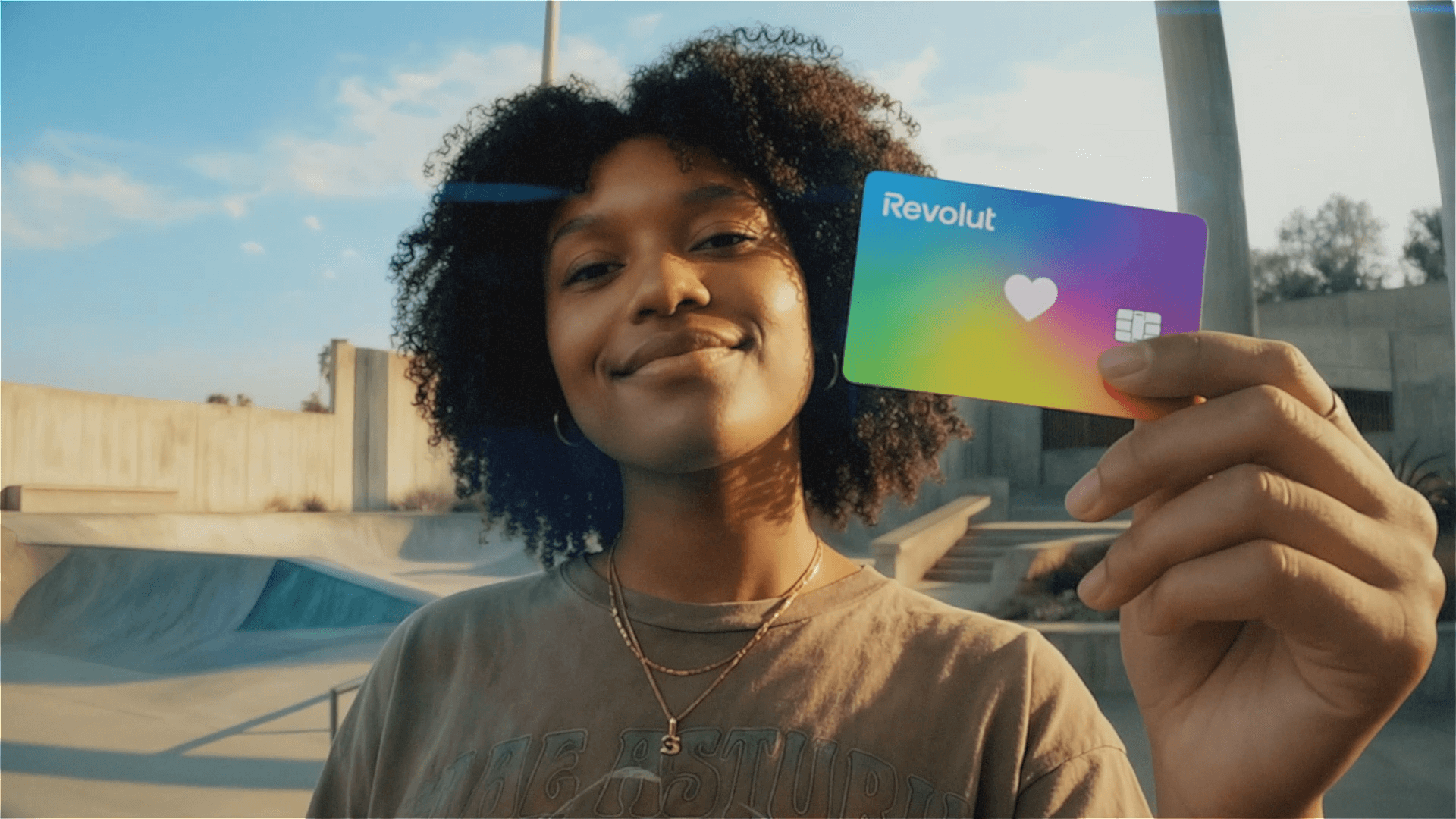
For an example of this in action, see our AI-powered spec ad we produced for Revolut.
Global enterprise
Working across markets requires cohesion, and partnering with an AI video agency means you can reach audiences globally. AI agencies skilled with localization can translate your video in over 130+ languages while preserving the speaker’s voice and lip movement. Coupled with human review and the support of navigating cultural differences across regions, an AI agency will meet expectations and the demands of a rapidly growing audience.
Synima’s work with the European Commission is a perfect example of this, with campaigns spanning over 50 languages and hundreds of cutdowns produced for a global audience.
How to run a 5-step shortlist process
Now that we’ve covered what to look for and avoid, here’s how to turn your search into a relevant shortlist:
The five steps:
1. First, define your output volume, note your industry-specific requirements, and assess your risk profile. You’ll want to partner with an agency who knows the legalities of the type of content you are producing, and offers the right amount of directive control.
2. List around 5 agencies that are recommended from listicles, Reddit threads, and your personal network. A diverse array of sources will ensure that your selection is objective.
3. Score each candidate against the seven criteria from Section 3. Those with the highest scores will handle your biggest concerns – from staying on budget, to legal compliance, to brand voice.
4. Send a structured RFP to your top three candidates.
5. Run a paid pilot project before signing a retainer.
12 questions to ask on a discovery call
The following questions will help you gain clarity, confidence, and potentially uncover red flags:
1. Which specific AI models do you use, and at which stage of the pipeline? AI tools should be used selectively and with purpose – agencies who jump to use the latest AI tools can interrupt workflows and grind efficiency to a halt.
2. Walk me through one project from brief to delivery. This question will give you insight into the amount of control and oversight they have over outputs.
3. Who’s on the team and what are their backgrounds? Great agencies have a mix of prompt engineers and traditional artists with years of industry experience on their team.
4. Can you show me a project with consistent characters across multiple scenes? AI can be unpredictable, but a leading agency will know how to direct output into a cohesive story.
5. What rights do we own, and what data leaves our project? AI agencies can tailor their services to give you full output rights.
6. Show me three projects in our sector from the last 12 months. Your industry will have specific legalities and considerations that a generalist may not comply with.
7. What’s your typical pricing band for a project like this? Pricing should be clear, up-front, and aligned with your project scope.
8. What does your post-delivery support look like for the first 90 days? An agency that offers long-term support means you can iterate, test and rely on a trusted workflow.
9. Who is the Senior Producer responsible for our account day-to-day?
10. What happens if we hate the first cut? With synthetic media, storyboards are now a more accurate portrayal of the finished project, so your agency should be in tune with your expectations.
11. How do you handle revisions – included or billable? Avoid unexpected costs by asking this up-front.
12. What’s your typical timeline from brief to first delivery? Agencies that cannot give you a clear timeline may still be in the early, experimental stages of AI production.
Leading AI video production agencies in 2026
The following agencies are established AI video production experts, backed by successful campaigns across a variety of sectors.
| Agency | Best for | Hybrid? | Sector Strengths | Notable Clients |
|---|---|---|---|---|
| Synima | Ambitious brands with high-stakes campaigns that need the insight provided by 25+ years of industry expertise and the reliability of a proprietary AI platform. | Yes | Healthcare, Finance, Technology, SaaS, E-commerce | Honeywell, HPE, J.P Morgan, Deloitte, KKR, S&P, Selective Insurance |
| Superside | In-house creative teams who need a helping hand. | Yes | SaaS, Technology | Figma, Doordash |
| Lemonlight | Businesses who want to pass the complexities of AI over to an agency. | Yes | E-commerce, Health | Amazon, Toyota |
| Wyzowl | Businesses looking for an agency that specialises in explainer videos and offers AI tools to help build them. | Yes | Technology, Finance | Dell |
| AiCandy | Bold brands who want eye-catching visuals. | No | Non-profit, Food | Oxfam |
| Gisteo | Brands who value a simple, hassle-free workflow. | Yes | SaaS | Barracuda |
| Waymark | Simple brand videos | No | Technology | Betr |
FAQ
What is an AI video production agency?
An AI video production agency is an agency that uses AI across all or parts of their workflow to create videos for clients, usually for less than a traditional video production agency and at a reduced timeframe. They may also use AI to create visuals that would otherwise be difficult to capture or animate.
How much does an AI video production agency cost in 2026?
Working with an AI video production agency can span a whole range of costs depending on the scope of your project and whether you are partnering with an AI-only or hybrid agency. An agency should have clear pricing bands, typically separated into three levels based on complexity and volume: per-asset, project-level, and retainer.
What’s the difference between an AI video tool and an AI video production agency?
The difference between an AI video tool and an AI video production agency is strategy. A tool will cover either one or a bundle of related tasks, like text-to-video generation or localisation. An agency, on the other hand, will use these tools, fine-tune them, and often combine them with traditional production methods and human creativity to craft video that is aligned with your message and needs.
Which AI video models do the best agencies use?
The best agencies use advanced models like Veo and Kling to build a toolkit that, when combined, results in realistic-looking, cohesive output. Great agencies will direct these tools with a critical eye to extract the most potential out of them, and may even have their own proprietary software. We here at Synima use our own bespoke platform, AI Animation, alongside custom built API’s to ensure we get the best results that are unique to our agency.
Can AI video production replace a traditional creative team?
Artificial intelligence driven video production can not fully replace the industry expertise and artistic oversight provided by traditional creative teams. Instead, AI video production empowers and collaborates with these traditional methods to create a workflow centered around speed and efficiency.
How do I avoid copyright issues with AI-generated video?
To avoid copyright issues with AI-generated video, be aware that each AI tool offers different legal protections. Alternatively, you can collaborate with an AI video agency that fully understands these legalities and can tailor their service to your specific needs. We at Synima own our own bespoke AI platform, AI Animation, and thus have used it to protect against IP issues for many of our clients.
How long does an AI video project take in 2026?
How long an AI video project takes depends on a variety of factors, but could range anywhere between 4 and 8 weeks. These factors could include the amount of human-intervention involved, the need for revisions, and the length of your synthetic media.
Choosing an AI video production agency in 2026 means choosing a workflow that suits your project’s needs. The strongest option is a hybrid team that can explain its AI stack, show sector-relevant proof, and take responsibility for the finished outcome. For buyers comparing options, the next step is to review how a hybrid pipeline works in practice and compare it against your own risk profile, budget, and content volume.
Want to experience how Synima transforms complex briefs into unforgettable stories? Get in touch to discuss your next project.
Contact us

Head of Marketing at Synima