

The role of a director demands equal parts technical expertise, creative vision, and interpersonal finesse. In this interview, Rachel Wan, Director and Producer, shares how she navigates diverse sectors, from defense technology to commercial camera equipment, while maintaining authentic storytelling at the center of her approach. Her insights on creative constraints, inclusive production environments, and the future of corporate video offer valuable perspective for anyone working in today’s rapidly evolving visual landscape.
How do you approach adapting your creative vision to fit unique sectors, from cutting-edge technology to defense firms?
No matter how niche or technical, storytelling is universal. At the end of the day, the story has to move people. It starts with understanding the core message – and why this story needs to be told – then shaping the vision to match the brand’s tone and goals, while connecting with the audience. Research the industry and its audience, really listen to the client, and get to know the product inside out. Once that foundation is solid, the creativity will come naturally.
In industries like defense, where there are often strict guidelines, how do you strike the right balance between creativity and staying true to the client’s brief?
Having strict guidelines and being creative don’t have to be mutually exclusive – they can work hand in hand. With industries like defense, every detail matters, from soldier uniforms to screen displays. We worked closely with clients to fact-check everything and then found creative solutions within those lines. Creativity comes in many forms and isn’t just about being bold.
With Systematic, for example, we used a split screen to visually connect the software to its real-world impact. It didn’t need to be flashy – it needed to feel trustworthy and grounded. But we still gave it a cinematic touch, so it resonates emotionally and visually.
What’s one piece of advice you’d give to someone starting out in production?
Be nice to your crew. They’re the ones who make the magic happen – under pressure, in long hours, and with incredible skill. I always try to create a set where everyone feels heard, respected, and connected. Even small things, like remembering dietary restrictions, go a long way. People often tell me my set feels ‘chill’, and that’s great. When people feel good, it shows in the work. Production is a process of collaboration – don’t forget who’s on your team.
The video production industry has historically been quite male dominated. How have you navigated that landscape, and what changes have you seen over the years?
There were definitely times I had to prove myself more than my male peers. I’ve also witnessed inappropriate comments on set, often from an older generation. But it’s not everyone – I’ve had mentors and colleagues from that same generation who’ve shown real support and respect. The industry is shifting a lot. There are more opportunities for young people now, and the newer wave is very inclusive and open-minded. Many sets today feel friendlier, with more awareness, training, and support in place. Things are moving in the right direction, but there’s still work to be done to make every set a safe, equal space for everyone.
Looking ahead, what emerging trend in corporate video production do you think will shape the industry in the near future?
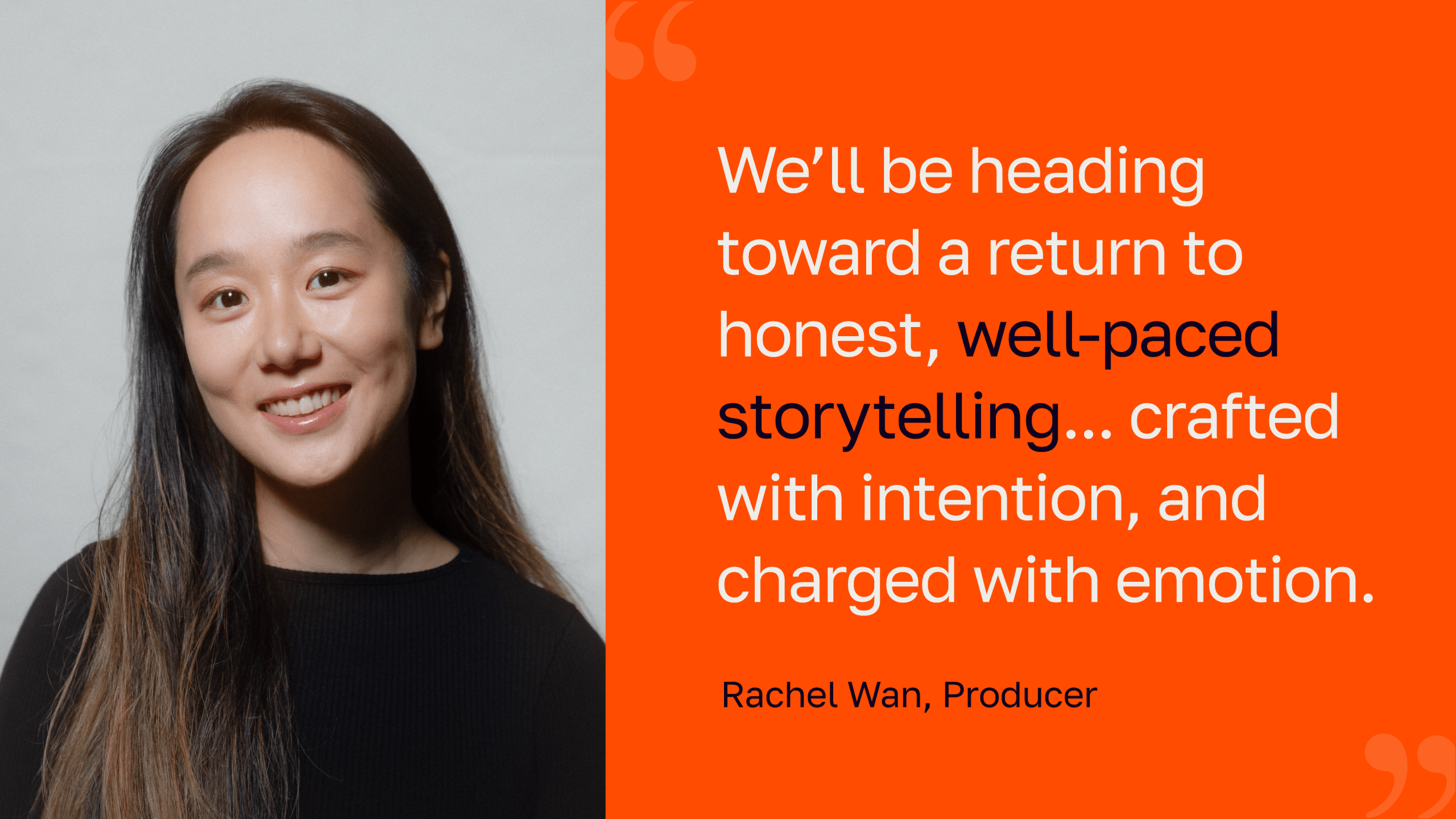
Authenticity. With the rise of short-form vertical content and AI, people will start to crave what feels real (if they haven’t already). Not everything needs to be fast-paced or 24/7 climax. I think we’ll be heading toward a return to honest, well-paced storytelling – something that breathes, is crafted with intention, and charged with emotion. The brands that can truly speak to and connect with their audience on that level will be the ones that stand out.
Connect With Us
At Synima, we bring a balanced approach to every project, finding creative solutions while honoring technical requirements and brand objectives. Looking to elevate your next production with authentic, resonant storytelling? Let’s connect.
Head of Marketing at Synima