

Why Use AI In Video Production?
A strategic, streamlined and efficient video production process helps you to meet the growing demand for regular video content whilst saving on resources and keeping production costs low. This application of artificial intelligence only looks set to grow with AI future animation developments.
Especially as audiences are increasingly expecting more – greater personalization, better interaction, and higher quality.
That’s why production studios, including our very own creative team here at Synima, are opting for AI video solutions, in which we achieve all of those expectations, and keep the creative process productive and precise. Accordingly, our range of AI creative services is growing apace.
AI video production support will have you upscaling older content, eliminating tedious tasks, and undergoing a complete digital media transformation. So, if you’re interested in boosting productivity with AI video tools or want to partner with a team that’s already got an AI-powered strategy in place, then feel free to contact us! We’ve got you covered.

What AI Video Production Can Do for Your Business
How AI automates video workflows can be broken into three main categories: creation, supplementation, and refinement.
At the creation stage, AI can be both a brainstorming and clarification tool, in which ideas are generated sooner and verified just as fast. Emerging tools like AI avatars and video generators are also shaping content creation.
Deep learning algorithms can also optimize content personalization, rework older content, and serve as a quick fix when a shot was filmed too tightly, or when a voice line was cut short. Individual, tedious tasks can be sped up by specific AI tools. The time you save is an additive process, totaled up across the production pipeline, from the quick AI fix that would’ve taken ages to refilm, or the AI generated creative concepts that would’ve taken much longer to finalize.
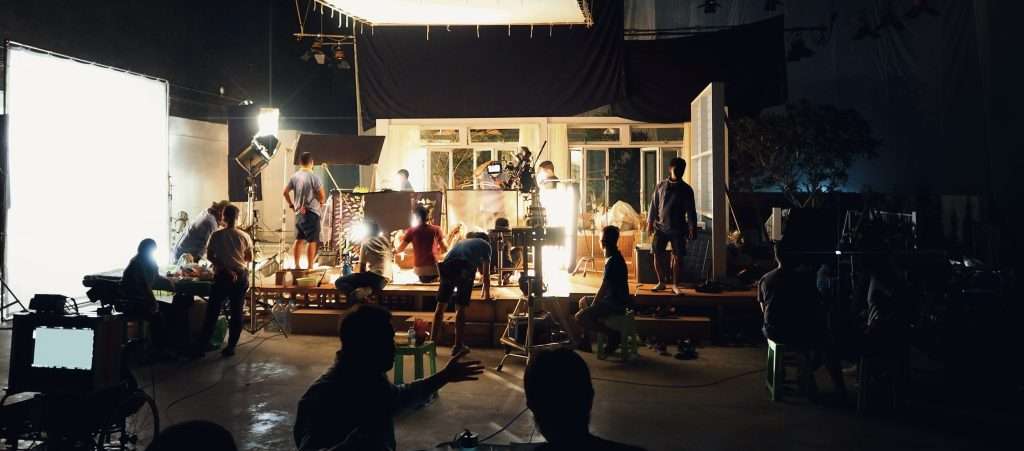
Key Advantages of an AI-Driven Production Process
Here, we’ll discuss some key advantages of video automation, from AI video editing benefits, to better budgeting, to creativity support.
Speed & Efficiency
Through AI technology, tedious tasks that would’ve taken hours to complete can now be accomplished in a matter of minutes, freeing up time for more creative, high-level decisions. Think pre-production tasks like AI-generated script breakdowns, and AI-assisted editing tasks like automated scene detection.
While smart automation helps you get the job done quicker, always check for mistakes. Subtitles, for example, absolutely need extra attention to iron out those commonly misinterpreted words (often contextual jargon). AI can miss those all-important human subtleties from video editing, too, choosing to cut out a pause, for example, that would’ve worked better left as is for dramatic effect.
Lower Production Costs
Cost reduction with AI video tools means that when our clients partner with us, they get the quality of a full-service production team for less. We use AI video production support across the process to lower costs, combining automated content generation, predictive analytics and AI resource allocation to work smarter.
AI for Enhanced Creativity
When working with Shan Foods to create a campaign celebrating Diwali, we used AI image generators after a call with the client to quickly produce visuals that could be verified and expanded upon, allowing us to align with the client’s vision faster. But AI-assisted storytelling needs guidance. We recommend you start using AI to generate ideas, and then use your creative eye to discern what works and expand upon it.
How to Successfully Integrate AI Video Production Support
Here we’ll discuss how to implement AI video tools, using our own integration as a guide!
Step 1: Identify where AI fits in your video process
It may be tempting to completely overhaul your creative process with AI tools, but true AI video workflow optimization starts small. We took to automating repetitive and time-consuming tasks first, and then expanded our AI use strategically.
You don’t want to change too much at once – not only does each tool have its own learning curve, but by identifying areas that need improvement, you’ll help your team by staying focused and manageable.
Step 2: Choose the right tools/companies for automation
The “best AI tool” for you depends on your specific needs. We tailor our choices based on the level of AI support our client wants, and you should consider your choices on an individual basis, too.
While AI video generation tools exist, we would not recommend using AI here unless you work with commercially safe data, and even then, we would suggest using it as supplementary footage, weaved in between video clips that are hand-crafted to elevate your brand image. For professional video or long-form video content especially, video generation tools can be hard to direct and will appear disorganized if used alone. As long as you focus on improvement, rather than replacement, AI tools will help, rather than hinder your production.
Step 3: Train your team to work alongside AI efficiently.
For AI to be of any real use to your team, you must foster an environment of AI literacy, where the interfaces, use cases and ethical considerations of each tool are discussed openly and thoroughly.
Since AI is in a continuous state of improvement, you’ll need to frequently update your AI team training materials, and tailor them to the specific tools you use. This is why it’s best to start out small with AI use, so that you have enough time to truly give your team the support they need and assess how they’re getting along with it more closely!
Step 4: Monitor results and optimize for ongoing improvement
Here’s where you assess whether AI helped or hindered the process. Some creatives might find that editing and fixing an AI generated script takes longer than writing one from scratch, or that solely relying on AI-generated ideas for concepts stifles innovation. Always be sure to monitor your integration of AI, optimizing areas that are working, and finding new solutions for those that aren’t.
Limitations of AI: The Ethical Debate Around AI Video Production
Of course, there are AI-generated content ethics that you should consider. Customers are increasingly favoring brands that are transparent about their practices, and with concerns like deepfakes and misinformation surrounding its use, you should be completely honest about when and how you use AI.
It’s also important to be aware of where AI can fall victim to bias and misinformation, especially if you use it for research and idea generation. Always be evaluating in accordance to what ethical AI video use is, which means using safe data, checking for misleading information, and being transparent. The impact of AI on the environment shouldn’t be overlooked, either. It’s not an unlimited resource, and should be used mindfully, just as you would use any other tool!
Looking Ahead: Types of AI Tools and the Future of the Production Process
AI is making what was once limited by budget, deadlines and physical constraints possible.
Some of these possibilities, which will only continue to get better, include AI-generated avatars and AI predictive content, which together supercharge video to suit the growing preference for personalized content.
The future of AI in media and video marketing looks promising, and one AI-driven storytelling trend that particularly excites us here at Synima is real-time content adaptation, which takes interactivity and hyper-personalized media to a whole new level. Imagine a video that is completely tailored to the individual, adapting in real-time based on their feedback. Staying relevant to the unique interests of each customer and catering to their needs will be completely transformed by this technology, and the further potential of adaptive video production is limitless.
Conclusion: AI Enhancement Needs Creatives
We’ve always prided ourselves on getting to the heart of our client’s message – truly understanding and creating content that allows the message to shine. AI cannot imitate that.
Artificial intelligence is not a replacement, instead, introducing AI-driven efficiency into our services has allowed us to keep up with the ever-evolving video production landscape and give our team the productivity boost they need. Because of these tools, we expect to see a complete digital transformation in media, with AI-powered video opening up a whole new avenue of content that is more personalized, innovative, and grander than ever.
So, if you’re looking for a production partner that incorporates AI video production support in their workflow or would like further advice on how to do the same, feel free to contact us at [email protected]..

Head of Marketing at Synima