

When thousands gather in Times Square and celebrities arrive in Batmobiles, how do you capture not just the moment, but the momentum? Our recent collaboration with iVisit Media on the FATAL FURY Times Square takeover reveals how event documentation has evolved from post-event recap to a real-time storytelling engine.
Beyond Documentation: Event Content as Strategic Asset
Traditional event coverage historically followed a predictable pattern: capture everything, edit later, hope the story emerges in post-production. But in today’s social-first landscape, that approach misses the critical window when audience attention peaks — during the event itself.
The FATAL FURY activation in Times Square, orchestrated by Turki al-Sheikh and executed by iVisit Media, exemplified a new approach. Rather than simply recording what happened, our team became part of the event’s momentum, creating content that amplified the experience as it unfolded.
Our experience revealed six key principles that are essential to incorporate when tackling live event documentation.
1. Embrace Chaos with Strategic Preparation
“There was so much happening everywhere, all at once, all week” reflects Producer/Director Sebastian Green, who led our documentary team through the five-day activation. “We made sure every crew member had a recording device just in case something spontaneous and unmissable happened.”
With just three crew members and often not knowing what would be filmed until each morning, this philosophy represents a fundamental shift: instead of controlling variables, successful event documentation requires embracing unpredictability while maintaining creative standards. Sebastian’s choice of the DJI Osmo Pocket III as his “Swiss Army knife of documentary filmmaking” exemplifies this approach — tools that enable small teams to be everywhere at once.
“We made sure every crew member had a recording device just in case something spontaneous and unmissable happened“
2. Multi-Location Coordination Demands Strategic Thinking
The FATAL FURY project required our team to operate across multiple New York boroughs, from rooftop establishing shots to street-level crowd reactions. When Ryan Garcia arrived in the Batmobile to thousands of fans held back by the NYPD, our crew wasn’t just documenting — they were part of the coordinated effort to capture and amplify the moment.
Key coordination challenges:
• Real-time communication between crews to capture complementary content.
• Immediate quality control with split-second capture decisions.
• Adaptive storytelling that evolves as events unfold.
3. Master the Daily Edit Imperative
Perhaps the most significant shift is the expectation of same-day content delivery. For FATAL FURY, this meant a relentless schedule with our three-person crew:
• Monday: Filmed all day → Edited overnight → Posted Tuesday
• Wednesday: Filmed all day → Edited overnight → Posted Thursday
• Friday (Fight Day): Filmed all day → Edited same day → Posted Saturday
Plus a polished overview edit released a week later to maintain momentum. This demands workflows optimized for speed without sacrificing quality — no pre-production, no shot lists, and no room for delay.
4. Create Content Ecosystems, Not Individual Pieces
Modern event documentation requires understanding how content lives across platforms:
• Instagram Stories: Behind-the-scenes content for insider feeling
• LinkedIn: Professional event coordination perspectives
• TikTok: Dynamic, music-driven viral highlights
• YouTube: Comprehensive long-form narratives
Each platform requires different approaches, editing styles, and distribution timing.
5. The Micro-Documentary Advantage
Our series of micro-documentaries for FATAL FURY represents an evolution in event storytelling. Rather than one comprehensive piece, we developed multiple focused narratives that could stand alone while contributing to the larger story.
Key advantages:
• Audience segmentation for different interests.
• Extended engagement over time.
• Flexible distribution to maintain momentum.
• Reduced risk if individual pieces don’t resonate.
The most valuable moments often happen when you’re not expecting them.
6. Prepare for the Unexpected
When Mike Tyson and Michael J. Fox are part of your event, the documentation strategy must accommodate both planned moments and spontaneous interactions. Sebastian’s insight about ensuring “every crew member had a recording device” speaks to a broader principle: the most valuable moments often happen when you’re not expecting them.
The Future of Live Event Content
As live events become increasingly integrated with digital experiences, documentation is evolving from separate service to core value proposition. The FATAL FURY Times Square takeover demonstrates how this works at scale — by treating documentation as integral to event strategy, brands create experiences that live and grow long after crowds disperse.
In an attention economy where moments of cultural relevance are increasingly rare, the ability to capture, craft, and distribute those moments in real-time has become essential. The question isn’t whether your event deserves documentation — it’s whether your documentation strategy deserves your event.
Interested in exploring how strategic event documentation could amplify your next activation? At Synima, we specialize in creating content ecosystems that extend event impact across all platforms and audiences.
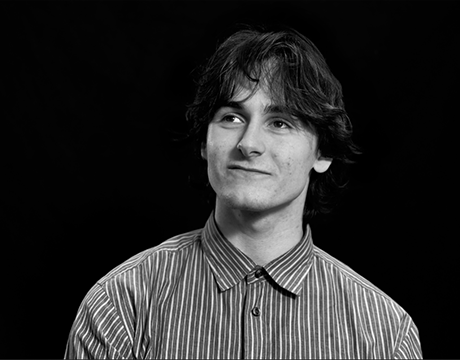
Head of Marketing at Synima