

In our ongoing series examining the technical and creative processes behind standout visual moments, we explore how strategic camera angle choices transform simple scenes into compelling storytelling.
When crafting visual narratives, every angle tells a story. Whether you’re creating corporate content, an education animation, or brand storytelling, the camera’s position relative to your subject shapes how audiences interpret and emotionally connect with your message.
In this breakdown, we examine four essential camera angles that demonstrate how perspective can dramatically alter audience engagement and narrative understanding. Each angle serves as distinct storytelling purpose — and understanding when and why to put them to use can elevate your content from functional to compelling.
The Strategic Framework
Effective camera work operates on both conscious and unconscious levels. While audiences might not actively notice your choice of camera angle, they feel the impact. Our approach centers on three core principles:
1. Psychological positioning: How does the camera’s relationship to the subject affect the viewer’s emotional state?
2. Information hierarchy: What does each angle reveal or conceal about the story?
3. Narrative progression: How do angle transitions guide the audience through your intended journey?
This framework ensures that technical choices serve strategic storytelling goals rather than merely showcasing visual variety.
The Four Essential Angles

Over-the-shoulder (OTS): Build Connection Through Proximity
The over-the-shoulder shot creates intimate psychological space between viewer and subject and is particularly powerful for creating empathy. By positioning the viewer ‘alongside’ one character while observing another, you create an immediate sense of shared perspective and emotional investment.
This angle works especially well for:
• Corporate testimonials where you want viewers to feel they’re part of the conversation
• Educational content that benefits from a “learning alongside” dynamic
• Any scenario where building trust and relatability is important
The key technical consideration is maintaining proper headroom and ensuring the foreground element (the shoulder) doesn’t dominate the frame, while still providing that crucial sense of perspective.

Shoulder Level: Establish Equality and Engagement
Moving to shoulder level creates a sense of equality between viewer and subject. This angle choice eliminates the psychological hierarchy that higher or lower angles create. Instead, it establishes what cinematographers call “neutral power dynamics” — the viewer neither looks up to nor down on the subject.
For corporate or educational content, shoulder-level framing:
• Reduces perceived barriers between presenter and audience
• Creates a professional yet approachable tone
• Works particularly well for expert interviews where you want authority without intimidation
• Maintains attention without the dramatic tension that more extreme angles might introduce
Technical execution requires careful attention to eye-line matching and ensuring the horizon line aligns with the subject’s shoulder area, creating that crucial sense of equality.
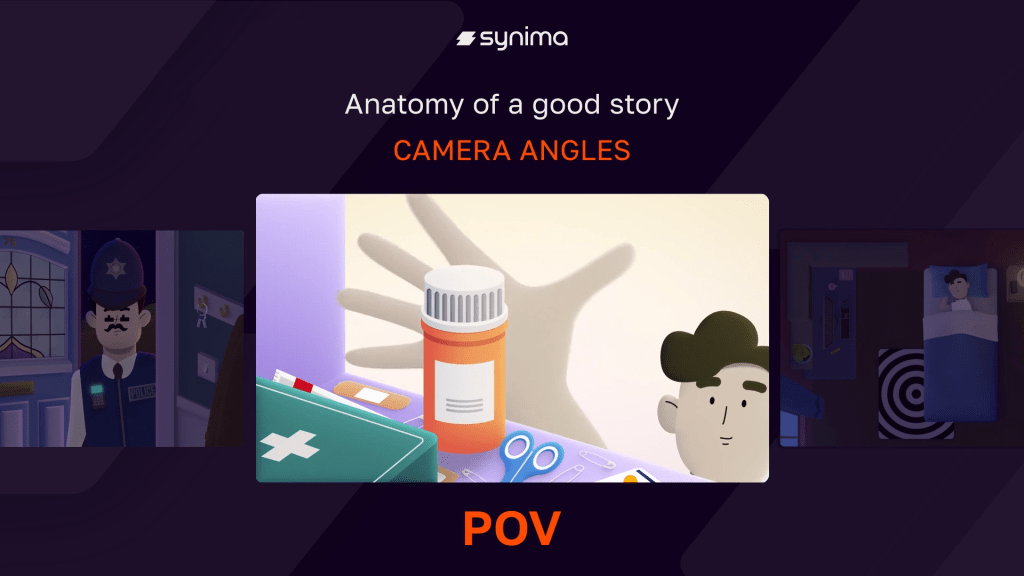
Point of View (POV): Immersive Perspective and Emotional Investment
The POV shot places viewers directly in the character’s visual space. POV shots create the strongest possible connection between audience and character. You’re not just watching someone’s experience — you’re having it alongside them.
This technique is particularly effective for:
• Product demonstrations where you want viewers to envision themselves using the item
• Process explanations that benefit from first-person guidance
• Emotional storytelling moments where maximum empathy is crucial
• Complex technical content where showing the user’s exact viewpoint eliminates confusion
The technical challenge with POV shots lies in maintaining visual clarity while accurately representing human perception. This often requires subtle adjustments to depth of field, slightly wider angles than actual human vision, and careful consideration of eye movement patterns.
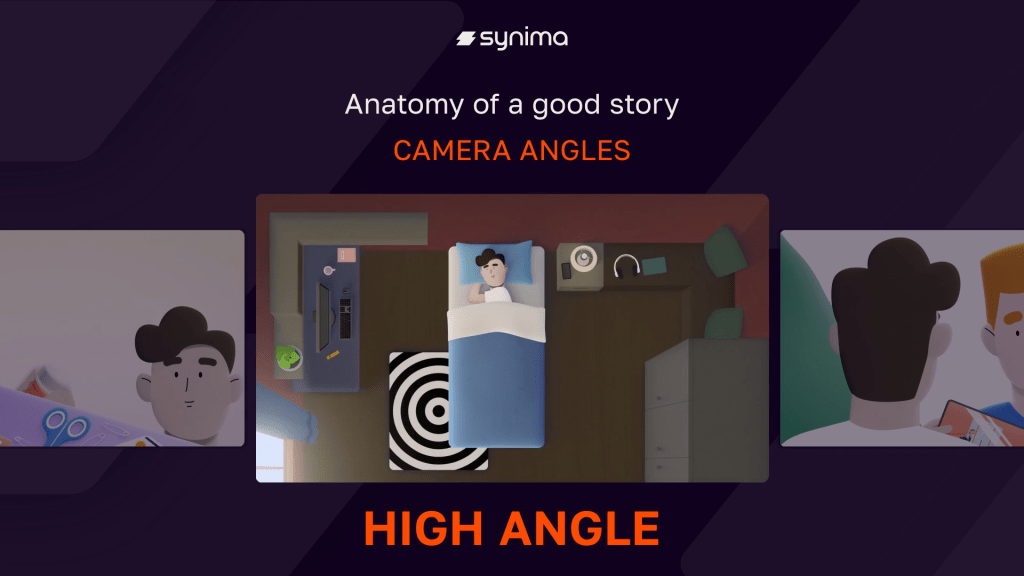
High Angle: Context, Vulnerability, and Narrative Control
The high angle shot provides comprehensive scene context while subtly influencing emotional interpretation. High angles serve multiple narrative functions:
• Environmental storytelling: Revealing spatial relationships and context that other angles miss
• Emotional positioning: Creating subtle feelings of vulnerability, isolation, or being observed
• Information delivery: Showing processes, layouts, or systems that require comprehensive visual understanding
• Transition moments: Providing natural bridges between intimate close-ups and wider establishing shots
The high angle is often underutilized in corporate content, yet it’s incredibly effective for showing complex processes or creating moments of reflection. However, it requires careful balance to avoid making subjects appear diminished.
Technical considerations include ensuring adequate lighting reaches the subject from above and managing potential shadows that can obscure important visual information.
When crafting visual narratives, every angle tells a story
Why Camera Angles Shape Narrative Perspective
Strategic use of camera angles creates several layers of audience engagement:
• Subconscious emotional guidance: Each angle triggers different psychological responses, allowing you to subtly influence how audiences feel about your content without relying solely on explicit messaging.
• Visual rhythm and pacing: Thoughtful angle transitions create natural viewing rhythms that maintain attention and guide audiences through complex information.
• Universal accessibility: These fundamental angles work across cultures and demographics because they leverage basic human spatial relationships and social dynamics.
• Technical flexibility: These core angles can be adapted across production scales, from high-end live action to efficient animation workflows.
• Narrative efficiency: Strategic angle choices can communicate complex information and emotional states without requiring additional dialogue or exposition.
The success of using camera angles strategically is rooted in intentionality. Rather than choosing angles based on visual novelty or technical convenience, let each choice serve your larger storytelling goal while maintaining production efficiency.
Practical Application
When planning your next project, consider these camera angle choices during the scripting phase rather than as an afterthought during production. Ask: What emotional relationship do we want between our audience and our subject? How much environmental context does our story require? Where do we need empathy, authority, or accessibility?
These foundational decisions will guide your technical execution and ensure that every visual choice serves your broader communication goals.
This article is part of our ongoing “Anatomy of a Shot” series, where we deconstruct the technical and creative processes behind standout visual moments. Sign up for our newsletter for more behind-the-scenes insights into our creative workflow.
Head of Marketing at Synima